
Rope Twist & Lay Direction: S-Twist and Z-Twist in Shibari Ropes – KIYOMI & Mitsuki Explained
Ropes have been essential tools for centuries – from sailing to modern Shibari and Kinbaku. In Japanese rope bondage, the lay direction (or twist) plays a huge role in how the rope feels and performs. S-twist and Z-twist describe the direction of the strands and directly affect handling, knot security, friction, and longevity.
AMATSUNAWA offers both options: KIYOMI as Z-twist and Mitsuki as S-twist, so you can pick exactly what suits your style.


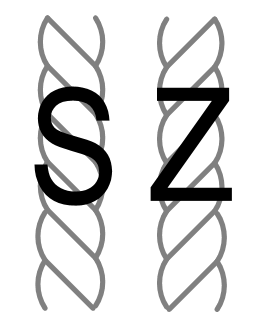
What Are S-Twist and Z-Twist?
Twist direction is named after the letter shapes the strands form. An S-twist (left-handed, S-laid) spirals like the middle stroke of an “S” – to the left when you look down the rope. A Z-twist (right-handed, Z-laid) spirals like a “Z” – to the right.
Quick check: hold the rope vertically and look along its length. The way the twists move away from you reveals the direction.
How Rope Twist Is Created
Quality rope is made in multiple stages with opposing twists for perfect balance. Filaments are first twisted one way into yarn. Yarns are then twisted the opposite way into strands. Finally, strands are twisted back in the original direction to form the finished rope.
This counter-twisting creates a stable, low-torque rope that resists unlaying or kinking. AMATSUNAWA follows this exact process – only the final lay differs: KIYOMI is Z-twisted, Mitsuki is S-twisted.
Twist Direction in Japanese Shibari Ropes
Traditional Japanese Shibari ropes are usually 3-strand natural fiber (jute or hemp) Z-twist ropes.
Z-lay ropes like KIYOMI coil naturally clockwise, feel intuitive in your hands, and offer balanced friction. S-lay ropes like Mitsuki tend to be softer and more flexible, which can be perfect for certain techniques or a gentler skin feel. Many riggers love Z-twist for reliable knot security and that classic “bite,” while S-twist gives extra give in complex wraps.
Practical Effects of Rope Twist on Performance
Your choice of twist direction influences a lot:
- Handling & Coiling: Z-twist (KIYOMI) often coils cleanly and resists kinking; S-twist (Mitsuki) feels more forgiving.
- Knots & Friction: The lay helps knots lock securely and provides the right amount of bite on skin.
- Torque & Stability: Balanced twist prevents unwanted rotation or unlaying during suspensions.
- Durability: Proper lay reduces fiber wear and keeps strength high longer.
- Feel on Skin: It subtly changes how the rope conforms and grips – Z for structure, S for softness.
Wrong twist or poor balance can make rope unpredictable – that’s why AMATSUNAWA’s two lines are carefully engineered for Shibari.
Why AMATSUNAWA Offers Both KIYOMI and Mitsuki
You have different preferences, so AMATSUNAWA gives you choices. KIYOMI delivers the classic Z-twist with optimum balance for versatile, reliable performance. Mitsuki brings the S-twist for extra flexibility and a softer touch.
Both meet the highest standards and are developed specifically for Shibari and Kinbaku. Whether you’re just starting or tying advanced scenes, you’ll find the perfect rope for your hands and your style.
Book Recommendations
- Knotting and Splicing Ropes and Cordage by Paul N. Hasluck – Timeless guide to rope work, knots, and construction.
- The Splicing Handbook (Third Edition) – Step-by-step techniques for traditional and modern ropes.
- Essence of Shibari: Kinbaku and Japanese Rope Bondage – Deep dive into rope selection and use in kinbaku.
- Foundations of Rope Bondage by Lazarus Redmayne et al. – Friendly intro to rope fundamentals and fun ties.
Sources
- AMATSUNAWA Rope Know-How
- Shibari Study, Reborn Ropes & general cordage resources on twist direction and shibari performance