
天つ縄 AMATSUNAWA Rope Diameter Guide – Choosing the Perfect Jute Rope Thickness for Shibari and Kinbaku
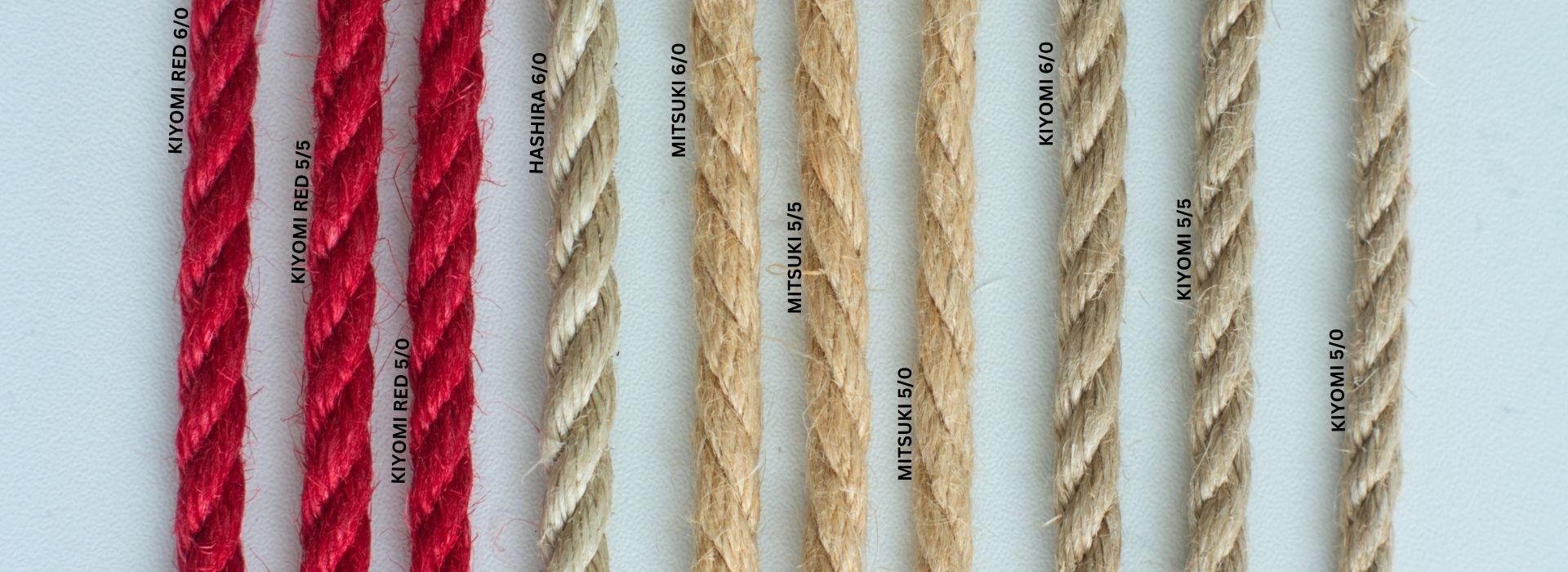
When selecting high-quality jute rope for Shibari and Kinbaku, one of the first questions is: Which rope diameter is right for me? Diameter affects not only looks and handling but also comfort, safety, and how weight is distributed.
In this detailed guide, you'll learn everything you need to make an informed choice.
Why Rope Diameter Matters So Much
The thicker the rope, the larger the contact area on the skin. This distributes body weight more evenly and reduces digging in – crucial during suspension. Thicker ropes also feel more stable and create a stronger visual impact. Thinner ropes are more flexible, great for intricate details, and perfect for floor work or styles like Yukimura-Ryū.
As a rule: Thicker rope = better load distribution. In a typical chest harness with double ropes and wraps, 6mm rope might spread weight over about 48 cm², while 5mm only covers around 40 cm² – that's a 17% reduction in support surface.
Recommendations for Common Diameters
Our recommendations are based on single-ply jute ropes like KIYOMI and AMATSUNAWA RAW or similar premium options:
- 6.0 mm ropes: Perfect for both floor and suspension work with body weights of 70–90 kg (154–198 lb). Highly recommended if your partner bruises easily.
- 5.5 mm ropes: Great for floor and suspension work for persons under 70 kg (154 lb).
- 5.0 mm ropes: Suitable for ground or suspension work with very lightweight persons.
- 4.5 mm ropes: Popular for floor work and certain creative styles (e.g. Yukimura-Ryū). Not for suspension.
- 4.0 mm ropes: Ideal for fine detail work and floor work. Not for suspension.
Safety Note and Breaking Load
Always check the breaking load before suspension. Head over to our detailed article on Jute Rope Breaking Strength & Safety Factors for exact values on HASHIRA, KIYOMI, and Mitsuki plus recommended safety factors (10–15x for suspension).
Note on Mitsuki: Because it's made from very fine yarn, Mitsuki has lower breaking strength. We do not recommend it for uplines.
Important Product Safety Note: AMATSUNAWA ropes are not certified as Personal Protective Equipment (PPE / PSA) and are not approved for climbing or load-bearing applications. Use is entirely at your own risk. Please read all warnings and safety information on our General Product Safety page.
Other Factors to Consider
Besides diameter, think about twist direction, conditioning, and your personal tying style. Thinner ropes feel more agile; thicker ones give more presence and stability. Grab a sample box and test what feels best for you.
Shibari and Kinbaku are all about respect, communication, and mindful practice. The right rope diameter helps you create safe, enjoyable sessions every time.
Got questions? Reach out – we're happy to help! Contact.
Book Recommendations
- Essence of Shibari: Kinbaku and Japanese Rope Bondage – A beautiful deep dive into the art of Kinbaku.
- Shibari You Can Use: Japanese Rope Bondage and Erotic Macramé by Lee Harrington and RiggerJay – Practical, step-by-step techniques.
- Complete Shibari Volume 1: Land by Douglas Kent – Excellent for floor work fundamentals.
- Shibari for Beginners: An Illustrated Guide – Perfect starter book with clear photos and instructions.
Lorem Ipsum dolor sit amet
Lorem ipsum dolor sit amet, consetetur sadipscing elitr, sed diam nonumy eirmod tempor invidunt ut labore et dolore magna aliquyam erat, sed diam voluptua. At vero eos et accusam et justo duo dolores et ea rebum. Stet clita kasd gubergren, no sea takimata sanctus est Lorem ipsum dolor sit amet. Lorem ipsum dolor sit amet, consetetur sadipscing elitr, sed diam nonumy eirmod tempor invidunt ut labore et dolore magna aliquyam erat, sed diam voluptua. At vero eos et accusam et justo duo dolores et ea rebum. Stet clita kasd gubergren, no sea takimata sanctus est Lorem ipsum dolor sit amet.