
Rope Know-How – In-Depth Knowledge About the Art of Rope Making
A high-quality rope is far more than just a tool. As the result of precise engineering, traditional rope-making techniques, and artisanal finishing, it forms the foundation for safety and expression in the art of bondage.
On this page, we have gathered everything you need to know about ropes: from the technical details of rope manufacturing, such as lay direction and strand construction, to the physical properties of various fibers, and practical guides on preparation, care, and the longevity of your equipment.
Whether you are just beginning your journey or you are an experienced rigger seeking a deeper understanding of the mechanics and production of your material – here you will find well-researched, transparent, and practical knowledge about the most essential tool of our craft.
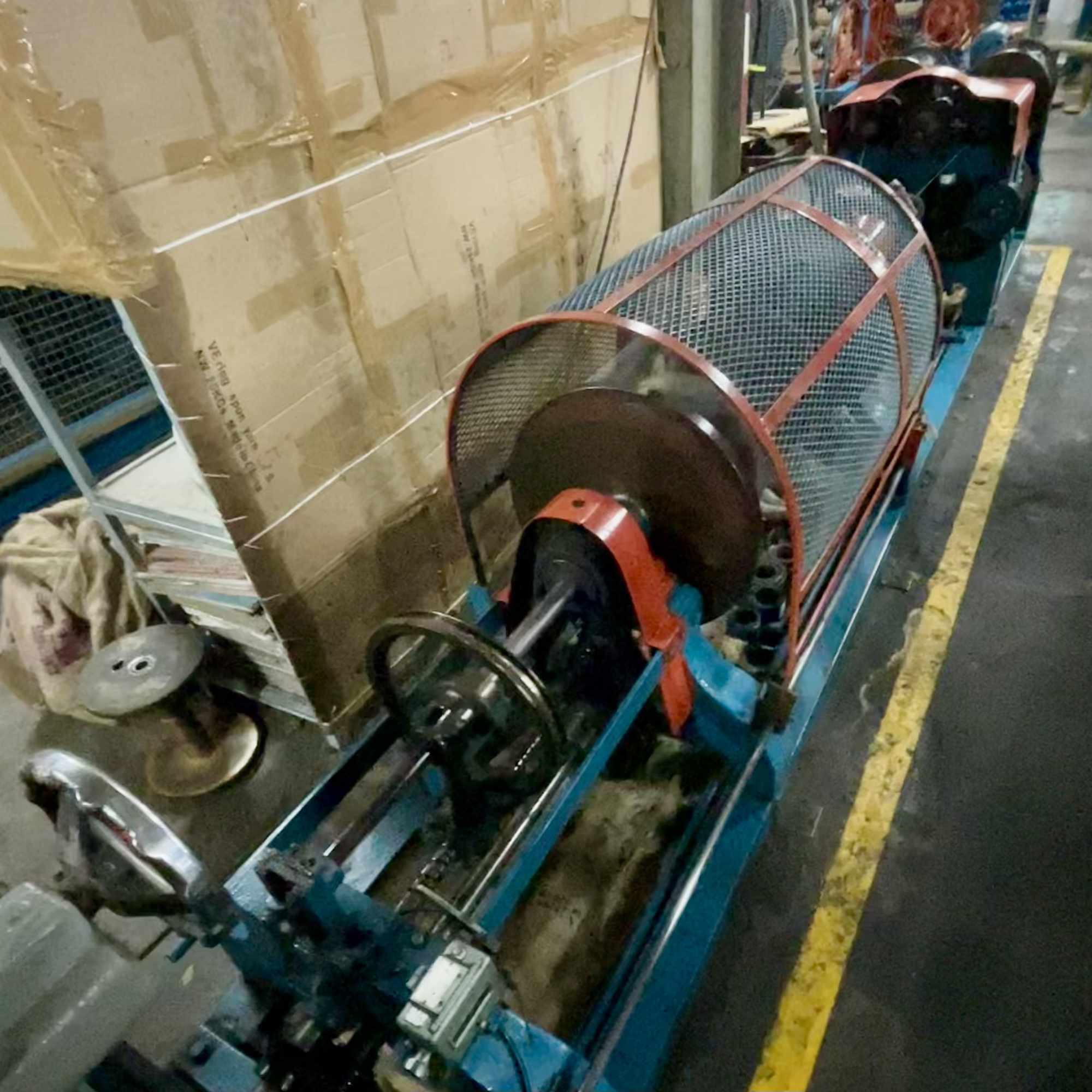
Discover how raw fibers are transformed through technical precision into an AMATSUNAWA rope and how we combine quality, durability, and aesthetics in every meter of rope. A well-founded collection of specialized knowledge of rope-making and more for everyone who wants to better understand and appreciate their ropes.

天つ縄 AMATSUNAWA Rope Diameter Guide – Choosing the Perfect Jute Rope Thickness for Shibari and Kinbaku
Rope diameter significantly affects comfort, load distribution, and injury prevention in Shibari and Kinbaku. This guide helps you choose the ideal thickness based on body weight, application, and personal sensitivity – with practical recommendations, breaking load reference, and essential Product Safety information.

Breaking Strength of Natural Fibre and Jute Ropes - Important Safety Factors for Shibari & Bondage
How strong are AMATSUNAWA jute ropes really?
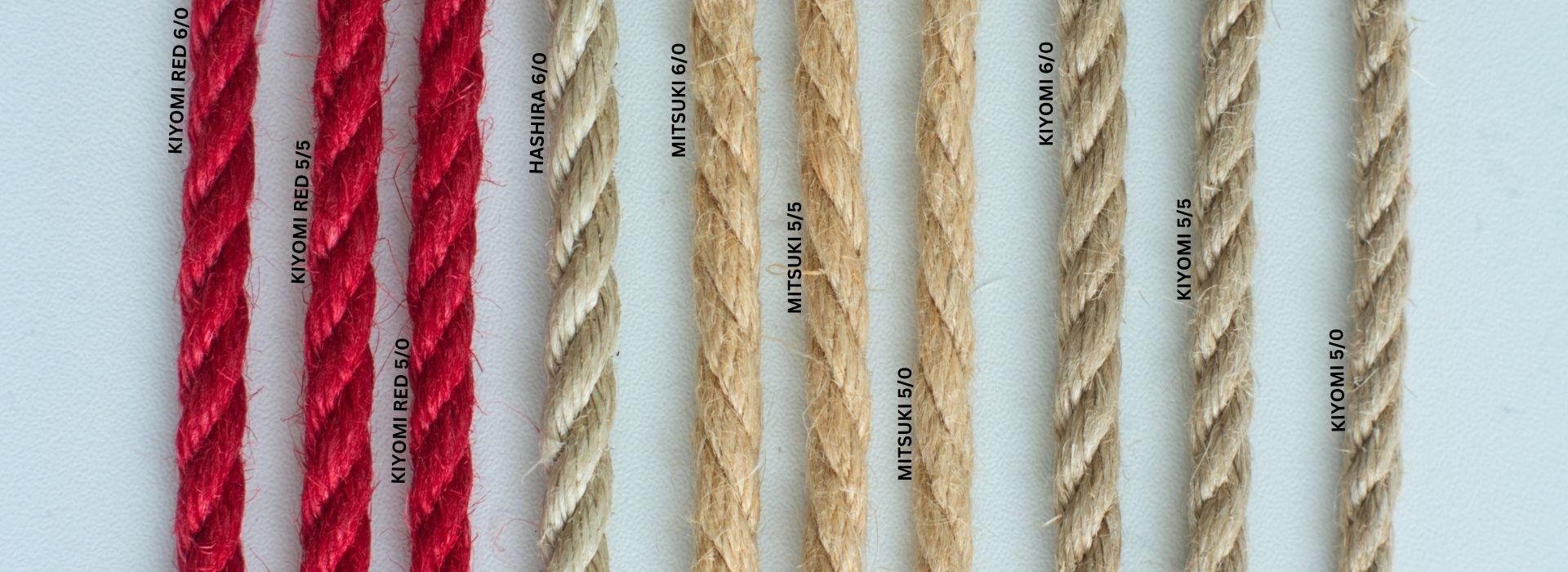
This page provides the exact breaking strength values of our premium jute ropes – KIYOMI (medium-lay), MITSUKI (loose-lay) and HASHIRA (hard-lay, tough for structural work). For 6 mm diameter, values range from approx. 190 to 230 daN (roughly 190–230 kg) depending on the type.
Knots reduce strength by 30–50 %, and dynamic loads (movement, jerks) can double or more than double the peak forces. That is why the Shibari and bondage community applies high safety factors: 5–8× for floor work, minimum 10× for partial suspension, and 12–15× or more for full suspension.
AMATSUNAWA ropes are JBO-free, skin-friendly and specially developed for prolonged skin contact. However, as natural fibre ropes they carry no PPE certification – use is always at your own risk.
Learn how to correctly calculate safe working loads and employ your ropes responsibly. Essential knowledge for safe rope play.
JBO – Batching Oil: Soybean Oil as Modern, Safe Alternative in Premium Jute Rope Production
What is JBO and why should it concern every rope enthusiast?
Jute Batching Oil (JBO) is a petroleum-derived mineral oil traditionally used in jute processing to soften fibres. It contains polycyclic aromatic hydrocarbons (PAHs) that have been linked in scientific studies to tumour-promoting and potentially carcinogenic effects, particularly with repeated skin contact. Many conventional jute ropes still contain residues of this mineral oil, which can transfer to the skin during Shibari or bondage sessions.
AMATSUNAWA completely avoids JBO and instead uses high-quality soybean oil as a safe, plant-based alternative. Soybean oil is non-toxic, low-odour, skin-friendly and free from carcinogenic PAHs. It produces soft, supple ropes that are ideal for prolonged skin contact without compromising health or performance.
This article explains the scientific background, highlights the risks of mineral JBO, presents the clear advantages of soybean oil, and offers practical guidance for safer rope selection. Responsible rope play begins with knowing what is on your ropes.
Rope Twist & Lay Direction: S-Twist and Z-Twist in Shibari Ropes – KIYOMI & Mitsuki Explained
Explore rope twist and lay direction in Shibari with AMATSUNAWA.
S-Twist and Z-Twist refer to the spiral direction of the strands and significantly affect handling, knot security, friction, and durability. Traditional Japanese Shibari ropes are usually Z-twist (right-laid). KIYOMI is the classic Z-twist rope offering optimum balance, intuitive feel, and reliable bite on the skin. Mitsuki, as an S-twist rope (left-laid), provides extra flexibility and a softer touch, ideal for complex wraps.
Both premium, untreated, JBO-free jute ropes from AMATSUNAWA are specially developed for Shibari and Kinbaku. Choose KIYOMI for versatile, structured performance or Mitsuki for forgiving softness – tailored to your individual style and technique.

Mobilization of the Plexus Brachialis Nerve Branch
How can you enjoy Shibari and rope bondage while protecting nerves from injury?
This article focuses on the brachial plexus – the sensitive nerve network in the shoulder and arm area that is particularly at risk during chest harnesses and arm ties. Compression, overstretching or prolonged pressure can lead to numbness, tingling or more serious nerve damage.
AMATSUNAWA presents practical solutions: simple, effective mobilization exercises for the brachial plexus that you can perform before and after sessions to maintain nerve mobility and reduce risk. You will also learn important tying tricks that help avoid dangerous pressure points in chest harnesses and other bindings. Clear anatomical background information, warning signs to watch for, and safe rope techniques make this guide essential for responsible riggers and bottoms alike.
Prevention is the key to long-term, injury-free rope play. Whether you are a beginner or experienced, these targeted measures help you tie more safely and mindfully. friendliness despite seasonal differences. This gives every AMATSUNAWA rope its own unique, natural character.
The History of Jute Rope: From Ancient Origins to Modern Shibari and Kinbaku
Did you know that jute ropes have a history spanning thousands of years?
Explore the captivating journey of jute from its ancient origins in the Indus Valley and the cultivation fields of Bengal to modern mastery in Shibari and Kinbaku. Long used as a sturdy material for sacks and ropes, jute found its way into rope bondage through Japanese artists. Its natural grip, flexibility, and characteristic “bite” on the skin make it the perfect rope for sophisticated techniques.
AMATSUNAWA continues this tradition with premium untreated jute ropes. KIYOMI and other high-quality lines combine historical authenticity with contemporary standards – JBO-free and specially developed for Shibari. Discover the cultural evolution of a simple natural fibre that became an icon of Japanese rope art.
Which rope material is best suited for Shibari and Kinbaku?
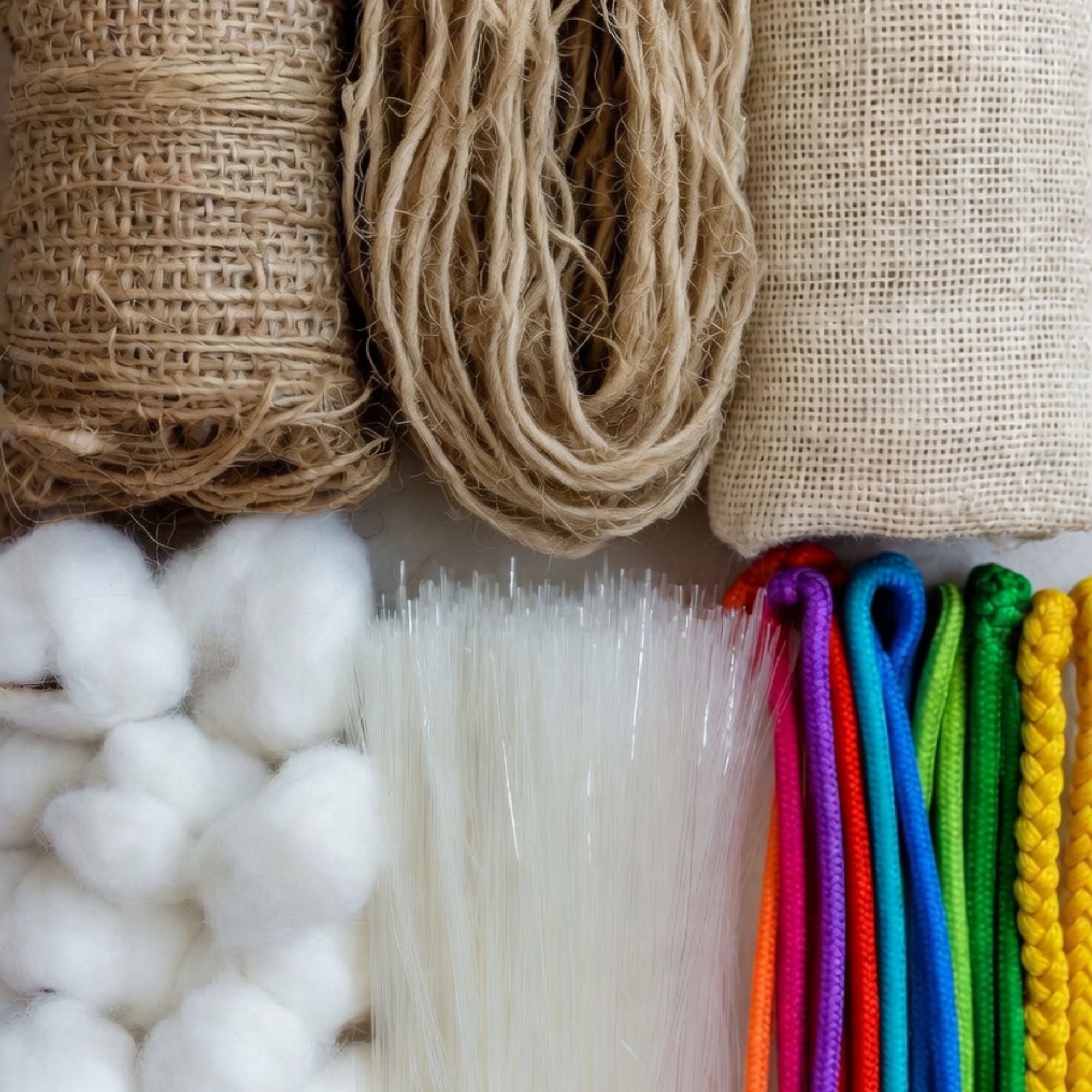
Explore a detailed comparison of the most common rope materials: Jute, Hemp, Linen, Cotton, and synthetics such as Nylon or paracord. Jute stands out with low elasticity, excellent grip, reliable “bite,” and the ability to absorb skin oils for an increasingly silky feel and lower burn risk. Compared to it, Hemp is stronger, Linen particularly tear-resistant, Cotton softer yet compressible, while synthetics offer high strength but create more friction and increase rope burn risk.
AMATSUNAWA relies on premium untreated, JBO-free jute ropes like KIYOMI that perfectly combine skin friendliness and eco-friendliness. Discover the pros and cons regarding handling, durability, skin compatibility, and sustainability for your personal practice.
Pre-Dyed Jute Ropes vs. Ropes from Pre-Dyed Yarn: Moisture, Shrinkage & Quality Check for Shibari and Kinbaku
What difference does it make whether jute ropes are dyed after twisting or made from pre-dyed yarn?
When choosing colored jute ropes for Shibari, the manufacturing process is critical for safety. Piece-dyed ropes are treated in a dye bath only after being twisted, which can make the fibers brittle and reduce their load capacity. High-quality alternatives, such as KIYOMI RED, are made from pre-dyed yarn, ensuring that structural integrity and suppleness remain fully intact.
A crucial factor is moisture behavior: jute shrinks when wet and swells in diameter. If ropes are dried without longitudinal tension, they lose stability. A quality check by counting the yarns (e.g., 33 yarns for 6 mm) exposes inferior, swollen products.
For safe suspensions, coloured ropes made from pre-dyed yarns are the safer option with regard to breaking load and longevity.
