
Jute Cultivation: Where Does the Golden Fibre Grow and What Does It Need?
Jute cultivation is highly specialized and heavily dependent on the monsoon. This article explains the unique growing conditions in Bengal, the influence of climate, and modern techniques like NINFET-Sathi – for anyone who wants to understand why Tossa Jute Grade 1 is the gold standard for premium Shibari ropes.


Where Does Jute Grow?
For non-edible applications such as high-quality ropes, jute is grown almost exclusively in Bengal due to the unique conditions of fresh, oxygen-rich water from the Ganges and Brahmaputra rivers and the temperature stability during the growing season.
The best cultivation areas are located in:
- India: West Bengal (approx. 75 % of Indian production), Bihar, Assam and Odisha
- Bangladesh: Mymensingh, Faridpur, Jessore and Rajshahi
Requirements for Soil and Climate
Jute is a demanding tropical plant. Optimal growing conditions include:
- Temperature: 24–37 °C (optimum 30–34 °C) with longer periods around 34 °C from March to September
- Rainfall: 1,600–2,000 mm evenly distributed during the growing season
- Soil: Deep, well-drained loamy or sandy-loamy alluvial soils with a pH value of 6.0–7.5
Farms in low-lying areas are prone to flooding, while higher areas often suffer from irrigation shortages. Both can significantly affect fibre quality. Inferior clay or sandy soils produce sticky and coarse fibres and require more fertiliser, residues of which may remain in the final product.
The Cultivation Process
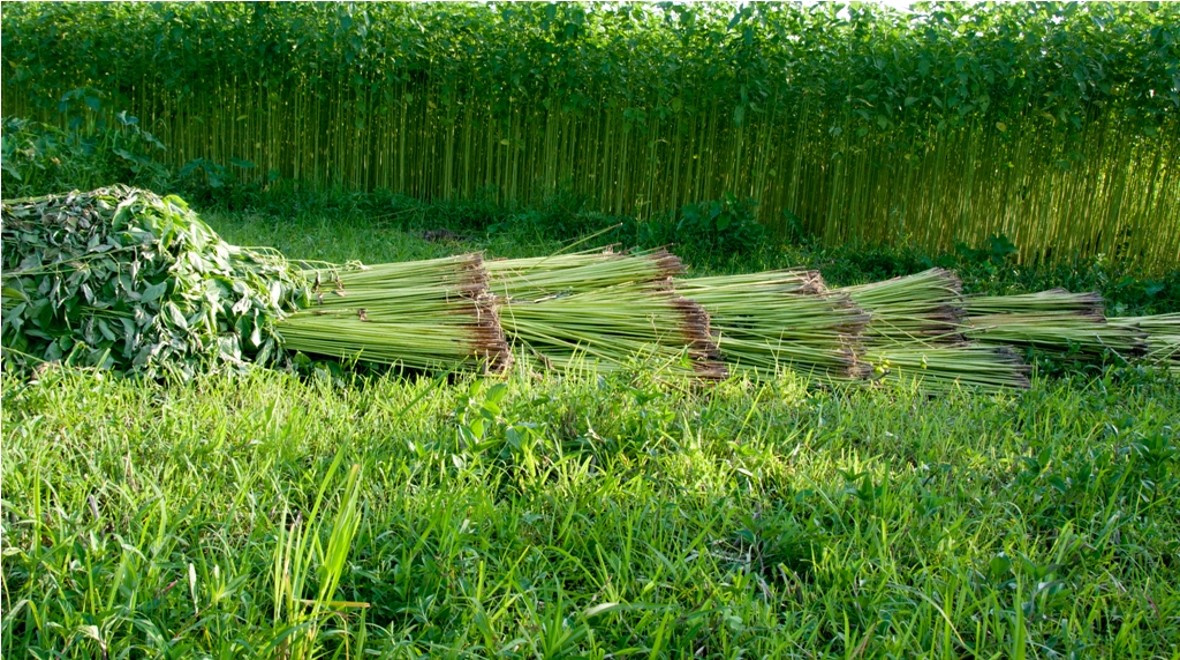
Jute is an annual plant that reaches harvest maturity in only 4–5 months. Sowing usually takes place between March and May. Growth is heavily dependent on seasonal monsoon rains. Low rainfall before the monsoon already affects plant and fibre quality.
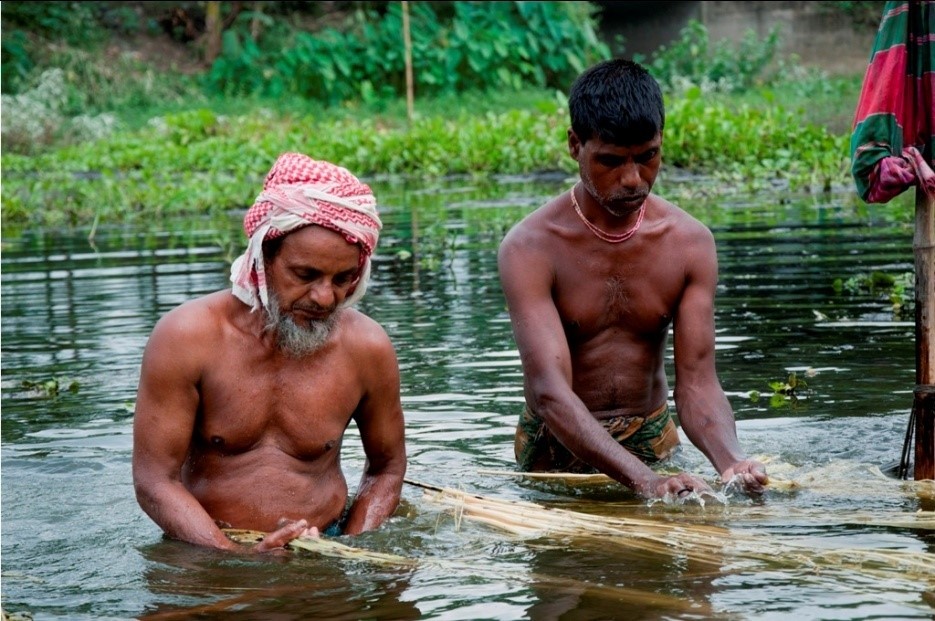
After harvest, the stems undergo retting – the most critical and environmentally impactful step. Traditionally, the stems are soaked in slowly flowing, clear water at approx. 34 °C for 8 days. Temperature fluctuations of more than 2 °C can double this period and reduce fibre quality. The jute fibre easily absorbs impurities from poor water quality.
Modern Retting Techniques
To reduce the disadvantages of traditional water retting, modern methods are increasingly used:
- Ribbon Retting: Mechanical separation of the bark before retting – saves water and improves quality.
- NINFET-Sathi: A biological accelerator that shortens the retting time to 10–12 days, improves fibre quality by 1–1.5 grades and significantly reduces water consumption.
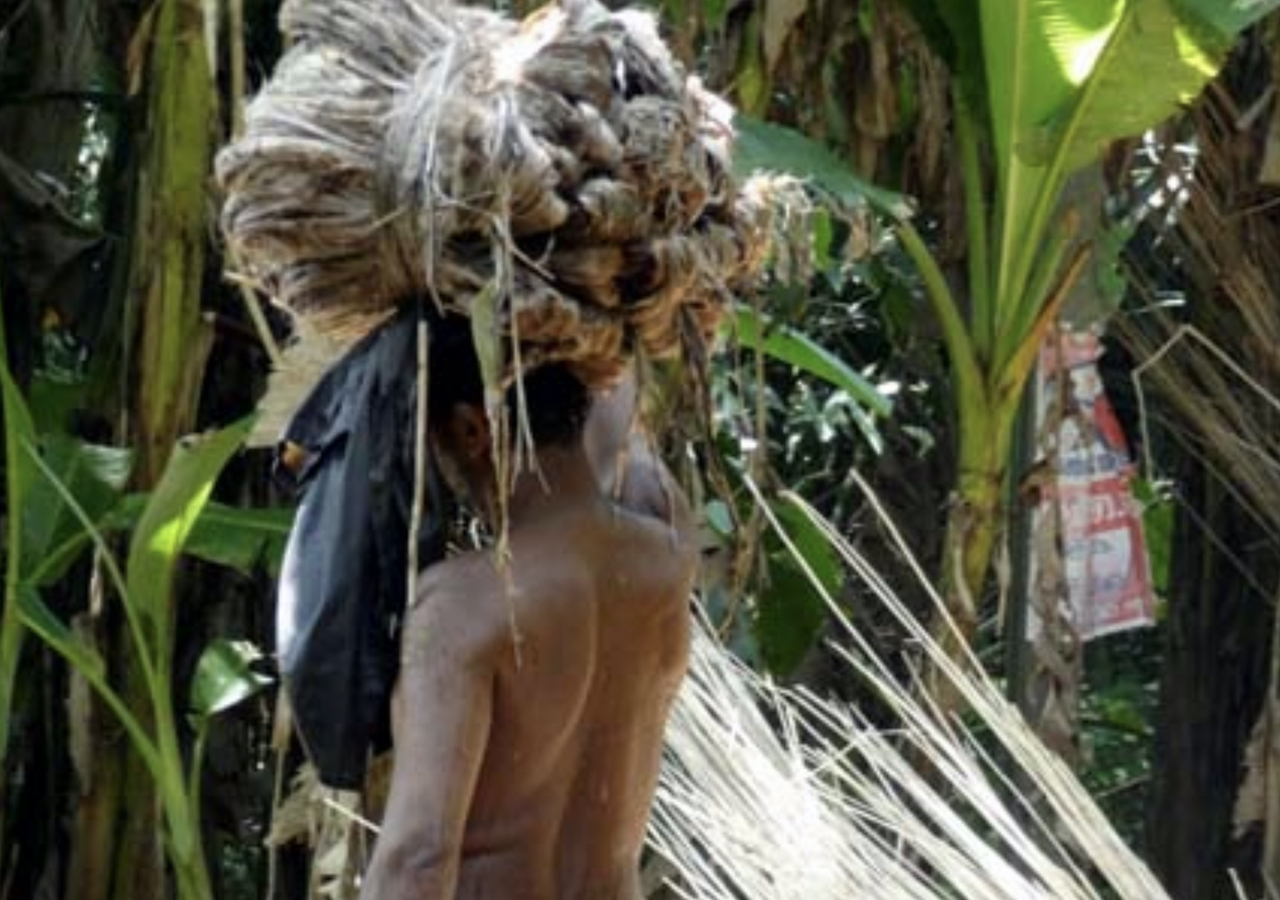
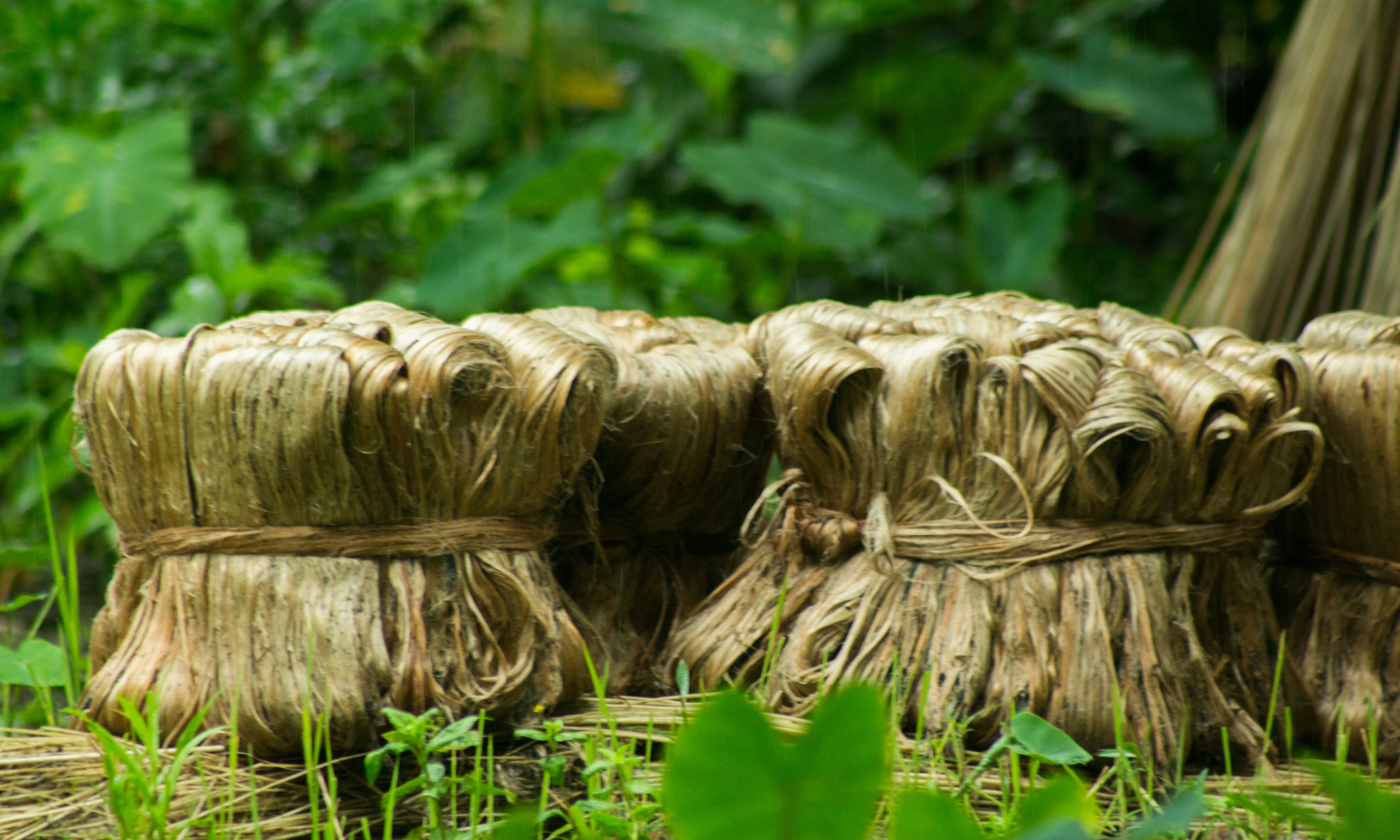
After hand stripping and natural air drying, the fibres are sorted by quality and pressed into Morah bales for shipment.
Sustainability and Circular Economy
Root and leaf waste serve as ideal natural fertiliser for vegetable intercrops on the same land. The outer bark and inner xylem are used locally as building materials, for example for roofing. Jute improves soil structure, reduces erosion and promotes natural humus formation.
Challenges and the Future of Jute Cultivation
Jute cultivation is strongly affected by climate change: irregular monsoon rains, longer dry periods, floods and rising temperatures threaten yield and fibre quality. Many farmers are already switching to more profitable crops such as maize.
Conclusion
Jute cultivation is highly specialized and closely linked to the unique conditions of the Ganges-Brahmaputra Delta. While traditional methods still dominate, modern techniques such as NINFET-Sathi enable more sustainable and higher-quality production. For manufacturers of premium Shibari ropes like AMATSUNAWA, securing high-quality Tossa Jute Grade 1 batches is crucial to maintain consistent quality despite climate change and market fluctuations.
Jute remains one of the most sustainable crops in the world – fast-growing, CO₂-binding and fully biodegradable.
Sources (as of March 2026)
- Directorate of Jute Development, India: Status Paper on Jute
- ICAR-NINFET Kolkata: Studies on Retting Technologies and Climate Change
- Food and Agriculture Organization (FAO): Jute Statistical Bulletins
- Bangladesh Jute Research Institute (BJRI) and Journal of Cleaner Production
Book Recommendations
- The Complete Book on Jute & Coir Products (With Cultivation & Processing) – NIIR Board of Consultants & Engineers
- Advances in Jute Agronomy, Processing and Marketing – Buddhadeb Bhattacharya